
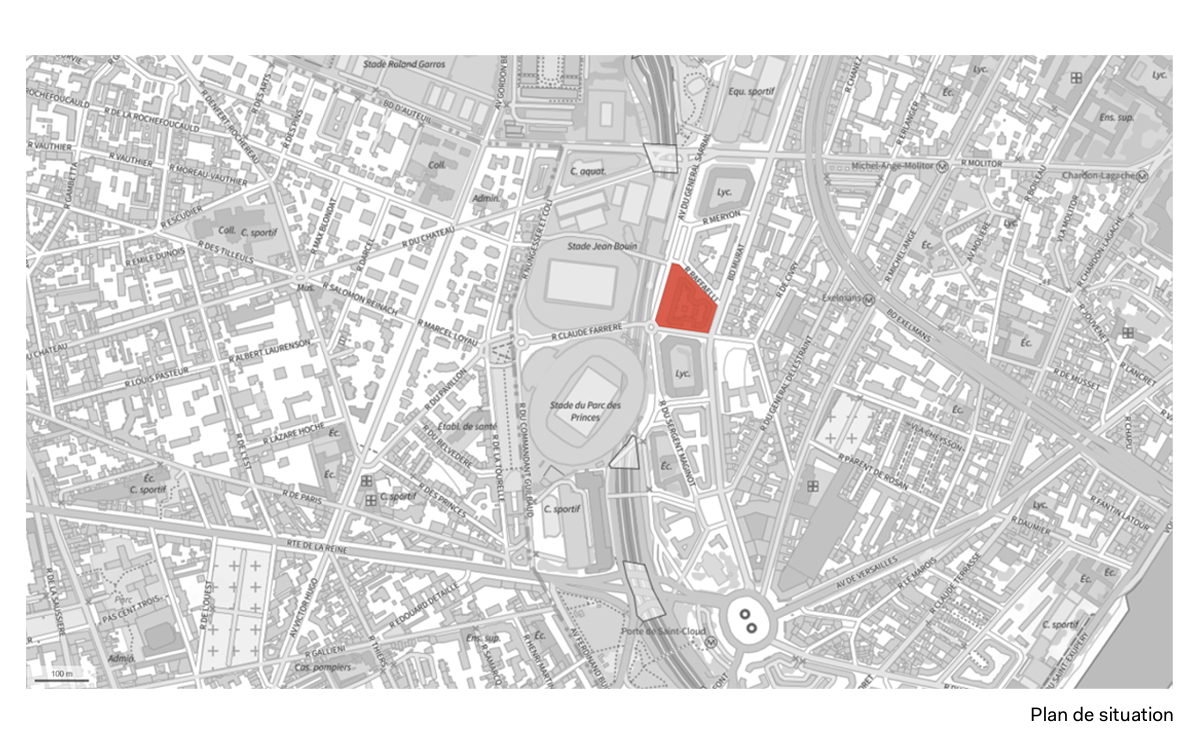
The project involves the rehabilitation of 264 occupied dwellings, a parking facility, and the improvement of common and outdoor spaces within the residential complex known as Groupe Molitor.
Client: Paris Habitat
Programme: Renovation, while occupied, of the Molitor residence (15 stairwells + a car park), improvement of outdoor areas and the quality of communal areas and services.
Surface Area: 14 642 m² SDP + 1730 m² outdoor areas
Budget: 8 350 000 € + VAT
Engineering: Codibat
Landscape: Vincent Lion paysage
Improvement in the energy performance rating (DPE)
The Molitor residence, located in Paris’s 16th arrondissement, is an emblematic HBM complex from the 1930s. Listed within several heritage protection zones and located near major landmarks such as the Molitor swimming pool, the Jardin des Serres d’Auteuil, and works by Le Corbusier, it holds significant urban and heritage value.
Organized around a large mineral inner courtyard, the complex includes fifteen stair cores, 264 dwellings, caretaker lodges, and ground-floor commercial units. Its structure—brick masonry, cement render, timber framing, and slate and zinc roofing—reflects a sober and rigorous architectural style typical of its time.
Despite its overall good condition, the building presented age-related limitations: lack of insulation, heterogeneous windows, inefficient ventilation, and poor thermal comfort. The fully mineral courtyard lacked vegetation and contributed to urban heat island effects, while service staircases and some structural elements showed signs of deterioration. The basement levels, comprising storage units and a parking area beneath the courtyard, exhibited issues related to past water infiltration. The dwellings themselves, well-designed and generous in layout, require technical and energy upgrades. The common areas retain high architectural quality but need adaptation to current standards of accessibility, safety, and comfort.
The rehabilitation project aims to sustainably improve comfort and usability while preserving the building’s architectural character. A key priority is improving ventilation, currently insufficient. The project proposes restoring the existing natural ventilation system by reopening previously sealed ventilation grilles, thereby re-establishing effective air circulation while maintaining architectural integrity.
All PVC windows, which have reached the end of their lifespan, are replaced with high-performance timber windows, improving the thermal performance of the envelope while enhancing the building’s heritage value.
The works also include upgrading electrical and gas systems to ensure safety and efficiency. The access control system is redesigned to incorporate video intercom technology and wireless solutions suited to rehabilitation conditions.
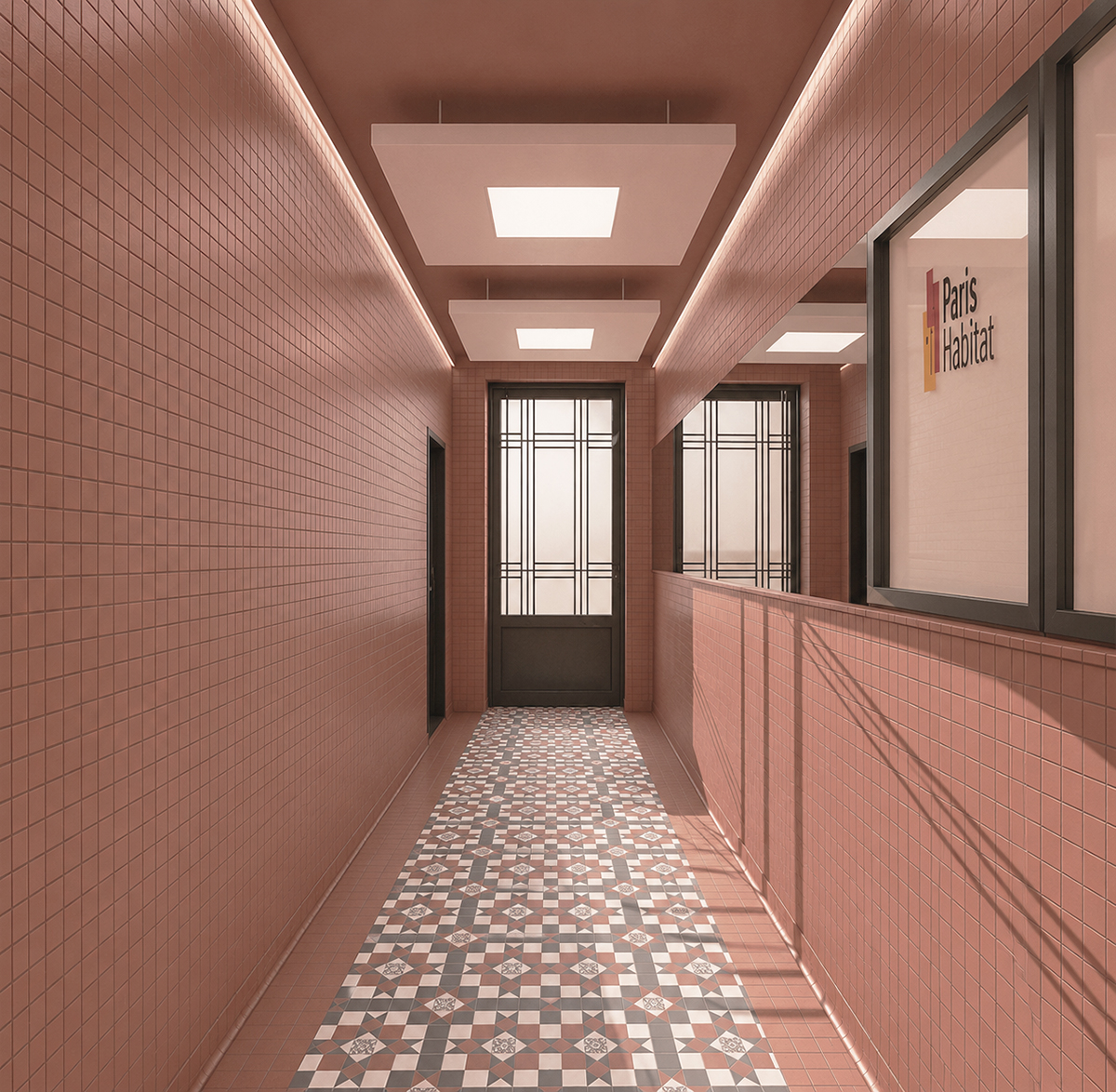
Entrance halls, as transition spaces between street and dwelling, are renovated with respect for the existing heritage. Materials and finishes are selected for durability and architectural coherence, while mailboxes are relocated to entrance areas to ensure accessibility and compliance with postal standards.
Universal accessibility guides all interventions: external pathways are adjusted to eliminate level differences, and the needs of residents with disabilities are considered from the diagnostic phase.
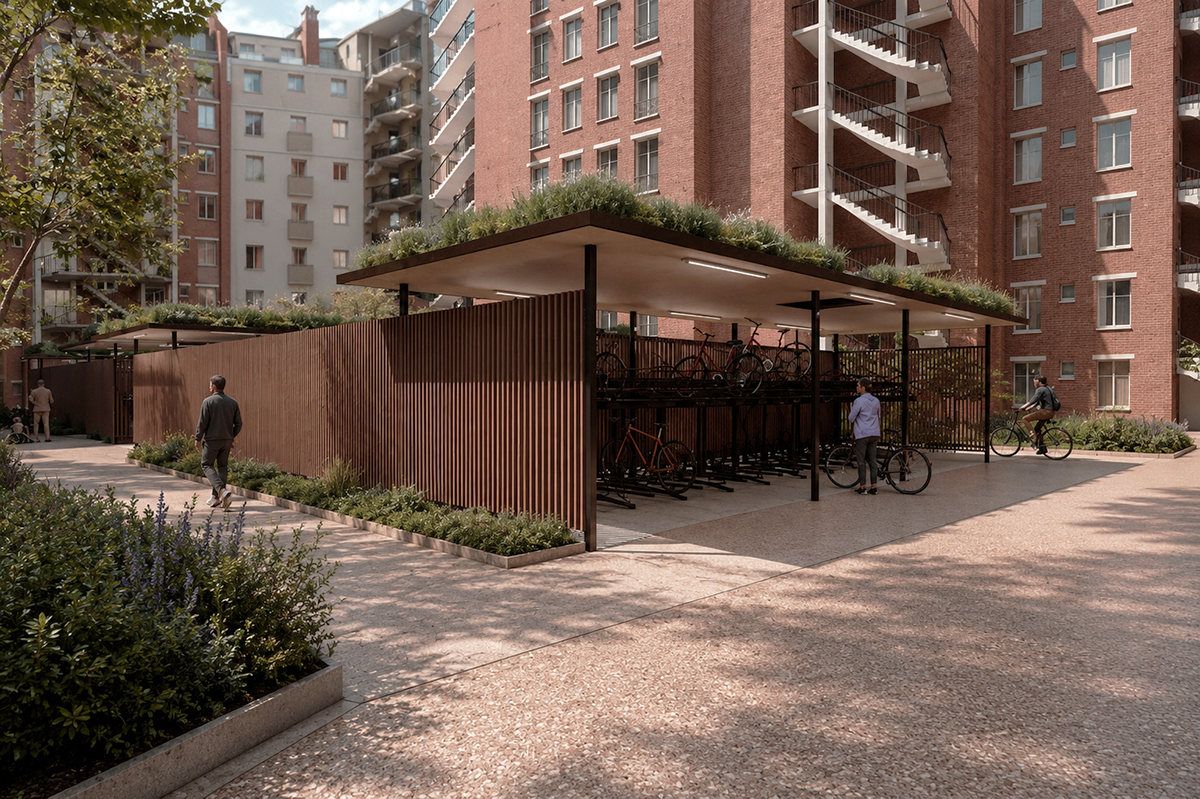
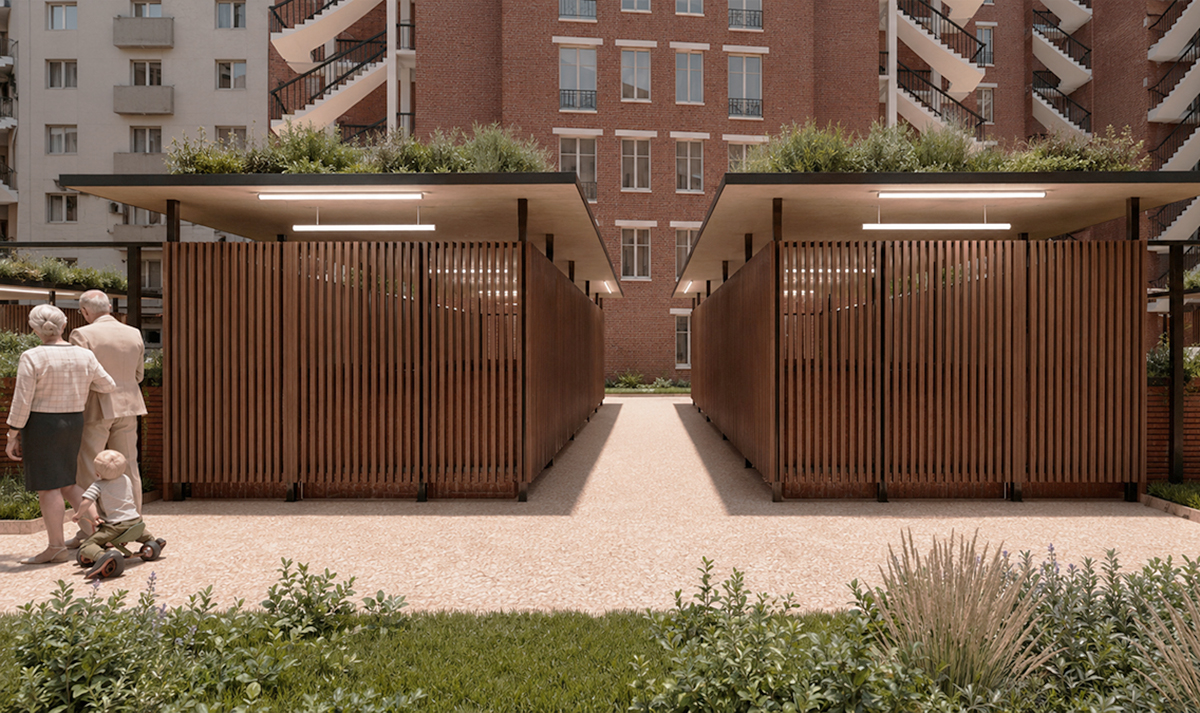
To improve service quality for residents, a comprehensive approach is taken regarding the organization of shared facilities (waste, bicycles, strollers) and the functioning of the residence, in close coordination with management and caretakers. These facilities, currently scattered throughout the courtyard, are regrouped at its center to reduce disturbance to ground-floor dwellings and preserve residential privacy.
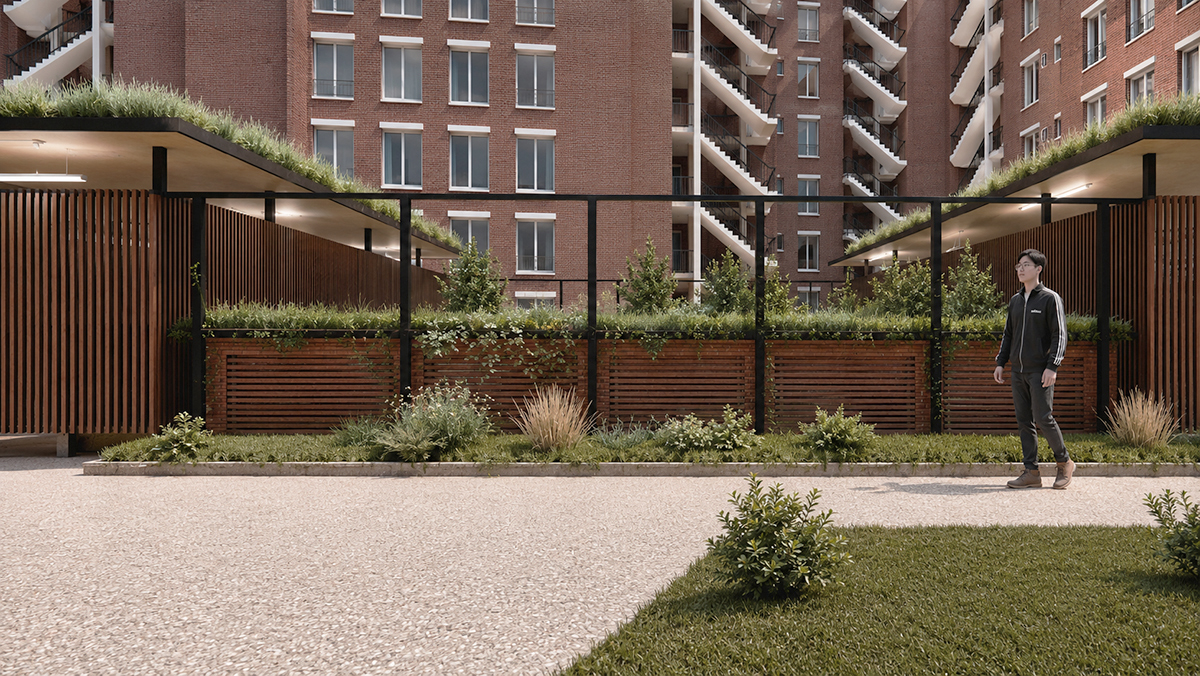
These lightweight new structures are designed to integrate seamlessly into the courtyard’s landscape project, contributing to the creation of a cooling island.
Landscape project
The landscape design adopts a biophilic and sustainable approach focused on user comfort and quality of life. It transforms outdoor spaces into a green, harmonious environment that promotes biodiversity, well-being, and climate resilience.
The intervention focuses on the inner courtyard, previously entirely mineral, transforming it into a space for relaxation and social interaction. A central axis connecting the courtyard to Boulevard Murat structures fluid and hierarchical circulation paths, accompanied by planted areas that redefine and organize shared spaces. Due to structural constraints of the parking slab, semi-intensive planting (sedums, perennials, and small shrubs) is favored, creating varied atmospheres depending on orientation.
New vegetation reduces urban heat island effects and improves microclimate quality, while a central cooling area with planted containers becomes a space for relaxation and social interaction. Parking structures are integrated using metal frameworks with climbing plants, enhancing visual continuity. Lighter, permeable paving reduces heat retention and improves comfort and accessibility.
Along the street, interventions remain discreet and respectful: paving is corrected to ensure accessibility, and new plantings enhance biodiversity while preserving the privacy of ground-floor dwellings.
Thus, the rehabilitation of the Molitor residence seeks a balance between memory and modernity, architectural continuity and environmental innovation, offering residents a sustainable, comfortable, and harmonious living environment true to its original spirit.

